

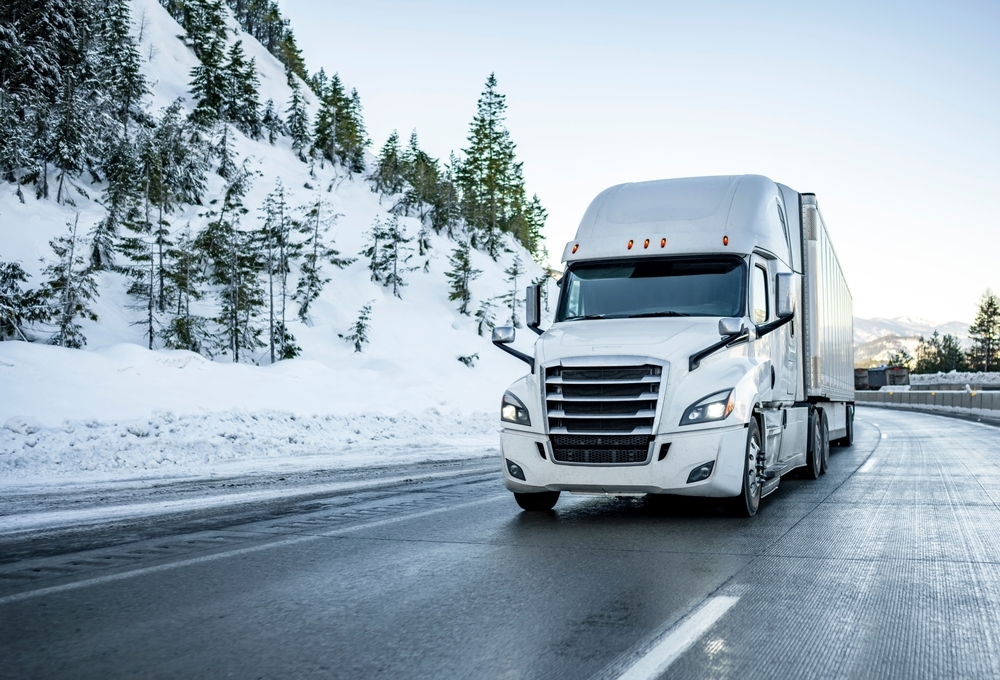
New Jersey winters are notorious for transforming high-speed thoroughfares into treacherous sheets of ice within minutes. For residents of Atlantic City, Linwood, and the surrounding South Jersey communities, the sight of a massive semi-truck on an icy highway is a cause for immediate concern. When a vehicle weighing eighty thousand pounds loses traction on a frozen surface, the results are almost always catastrophic.
At The Law Offices of Richard A. Stoloff, we have seen firsthand the devastation these collisions cause for families throughout the Garden State. Understanding the primary causes of these truck accidents is the first step toward safety and legal recovery. This blog explores why truck accidents occur so frequently during our cold January months and what victims can do to seek justice after a crash.
The Unique Dangers of New Jersey Winter Highways
The geography of New Jersey makes it a hub for commercial transportation.
With major routes like the Garden State Parkway, the New Jersey Turnpike, and the Atlantic City Expressway carrying thousands of trucks daily, the risk factor increases exponentially when winter weather hits. Icy conditions on these specific highways are unique because of the proximity to the ocean, which can lead to sudden black ice formations that are invisible to the eye. Unlike a standard passenger car, a commercial truck has a high center of gravity and a much longer stopping distance. When ice is added to the equation, the margin for error disappears entirely.
For those sharing the road with these behemoths, the danger is ever-present from December through March. These local weather patterns often catch out-of-state drivers completely off-guard.
Similar Post: How Does Winter Weather Affect Car Accident Claims In Atlantic County And South Jersey?
Driving Too Fast for Hazardous Road Conditions
One of the most common causes of truck accidents on icy New Jersey roads is driving too fast for the conditions. While a truck driver might technically be staying under the posted speed limit, New Jersey law requires drivers to adjust their speed based on the actual hazards present on the roadway. An icy bridge or a slushy exit ramp requires a significant reduction in velocity to maintain control.
Many commercial drivers are under immense pressure from their employers to meet tight delivery deadlines, which often leads to them taking unnecessary risks. When a truck travels too fast on ice, the tires lose their grip, leading to a total loss of steering capability. This negligence is a primary factor in winter highway litigation across the state.
Improper Braking and the Risk of Jackknifing
Improper braking techniques are another major contributor to winter truck crashes. When a driver encounters a patch of ice, the natural instinct is often to slam on the brakes. However, for a tractor-trailer, this sudden application of force can cause the wheels to lock up immediately. On a frozen surface, locked wheels lead to a phenomenon known as jackknifing, where the trailer swings out to the side at a sharp angle to the cab.
A jackknifed truck can block every lane of traffic on a highway like Route 9 or the Expressway, creating a massive pileup. Truck drivers are supposed to receive specialized training in feathering the brakes and using engine braking techniques to slow down safely on ice without losing control.
Negligent Vehicle Maintenance and Mechanical Failure
Mechanical failure and poor vehicle maintenance also play a significant role in January accidents. Commercial trucks must be rigorously inspected, but in the rush of the holiday season and the cold start of the New Year, maintenance often falls by the wayside. Worn-out tire treads are particularly dangerous on icy New Jersey highways, as they cannot provide the necessary friction to grip the road. Furthermore, the air brake systems on large trucks can sometimes freeze if moisture gets into the lines, leading to brake failure at the exact moment the driver needs them most.
When a trucking company fails to properly winterize its fleet or ignores Federal Motor Carrier Safety Administration regulations, they can be held liable for the resulting injuries. Every component must be in peak condition to handle frozen asphalt safely.
Driver Fatigue and Reduced Reaction Times
Driver fatigue remains a persistent issue in the trucking industry, and it becomes even more dangerous during the winter months. Driving on ice requires intense concentration and constant physical adjustments. A driver who is exhausted from being behind the wheel for too many hours is less likely to react quickly to a sudden skid or a patch of black ice. New Jersey sees many accidents where a fatigued driver simply fails to recognize the changing road conditions until it is too late.
Federal Hours of Service rules are designed to prevent this, but violations are common. When you combine a tired driver with a slippery highway, the probability of a fatal collision increases. This intersection of human error and environmental hazard is deadly for South Jersey commuters.
Improper Cargo Loading and Weight Distribution
Poorly loaded or unbalanced cargo can turn a routine winter drive into a disaster. If a trailer is top-heavy or the weight is shifted too far to one side, the truck becomes much harder to stabilize once it begins to slide on ice. On New Jersey’s winding highway ramps, an unbalanced load can cause a truck to roll over if the driver makes a sharp turn on a slick surface. Shipping companies and loaders have a legal responsibility to ensure that every trailer is packed according to safety standards.
If improper loading contributed to your accident, there may be multiple parties responsible for your damages, including the trucking company and the third-party contractors who handled the freight before the journey began.
Similar Post: Can You Sue for Damages After a Truck with an Unbalanced Load Causes an Accident?
Contact a South Jersey Truck Accident Lawyer Today
Navigating the aftermath of a truck accident on an icy highway is an overwhelming experience for families. Victims face mounting medical bills, lost wages, and physical pain. At The Law Offices of Richard A. Stoloff, we understand New Jersey law and the unique challenges of truck litigation. We investigate the crash by analyzing electronic logging data and interviewing accident reconstruction experts.


If you were injured due to negligence this winter, do not fight insurance companies alone. Our personal injury firm provides aggressive representation and compassionate guidance to secure your compensation. Contact our Linwood office today at (609) 957-6810 for a free consultation. Our legal team is ready to help you recover and move forward with your life in this New Year.
Disclaimer: This blog is intended for informational purposes only and does not establish an attorney-client relationship. It should not be considered as legal advice. For personalized legal assistance, please consult our team directly.